 Frame of Mind
Get a Quote
Frame of Mind
Get a Quote
Frame of Mind
Get a Quote
Frame of Mind
Get a Quote
4 min read · January 2026
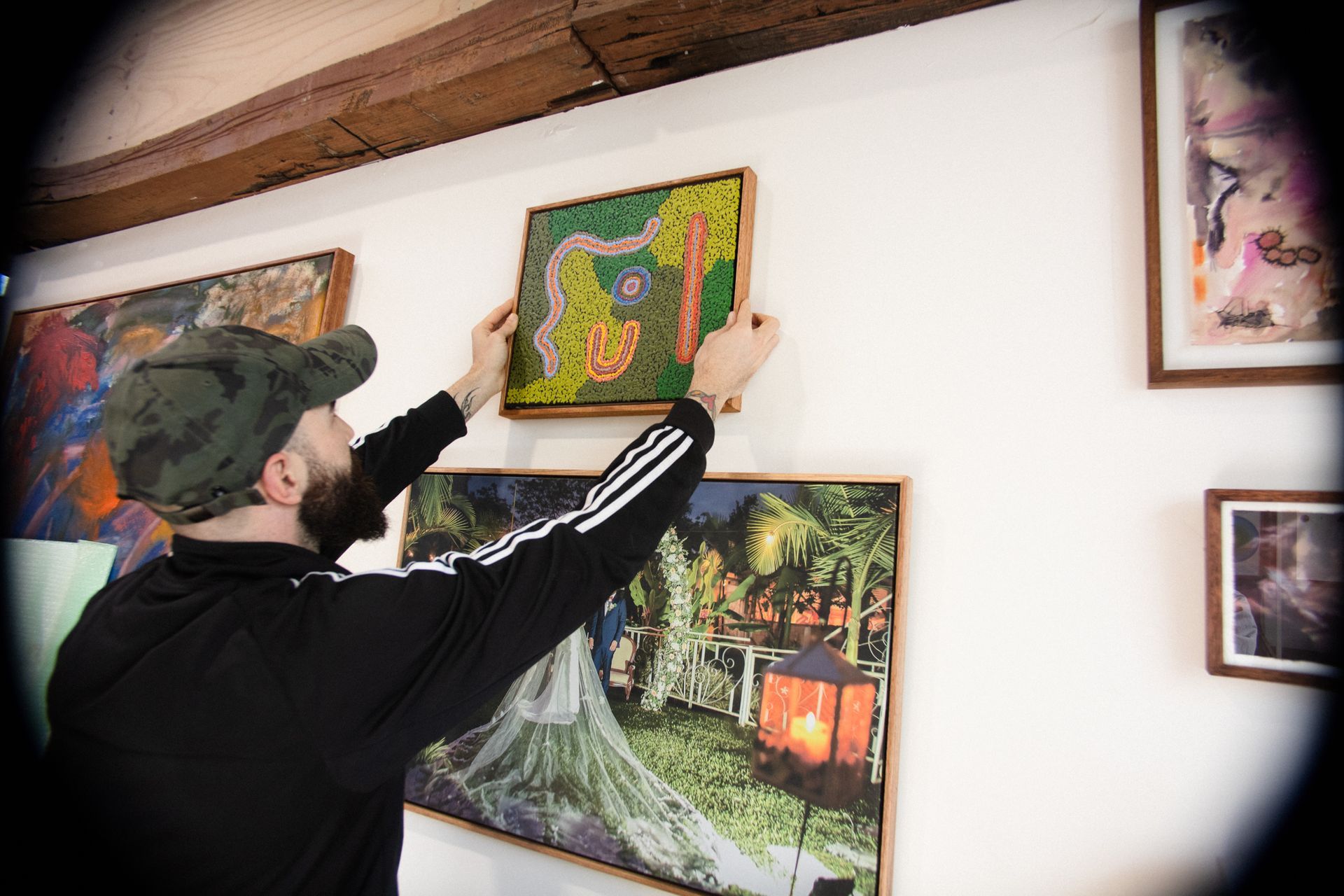
Your canvas arrives from the supplier flat, or rolled in a tube. Then it comes to us. Here is what happens between there and your wall.
Stretcher bar depth determines how your canvas sits on the wall. We offer three standards:
Australian pine, sourced from managed plantations. It is strong, straight, and resists warping. We cross-brace stretchers over 800mm in any direction, and always on canvases over 1.2m.
We stretch by hand using stretching pliers and a mallet. The goal is even tension across the face. Too loose and the canvas sags; too tight and it warps the bars. Most importantly: tension should be symmetrical so the canvas pulls evenly on all four sides.
Both work. Framed canvas suits more traditional interiors and gallery walls. Unframed stretched canvas has a modern, straight-from-the-studio feel. Frame of Mind does plenty of both. If undecided, grab your canvas and drop in, we will show you the same piece both ways.
Good canvas stretching is invisible. You notice bad stretching the second you see it.
Thanks for reading
Get a Free Quote